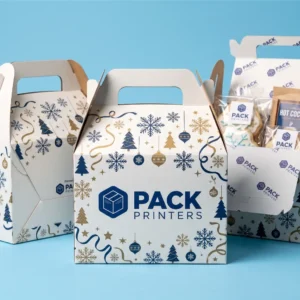
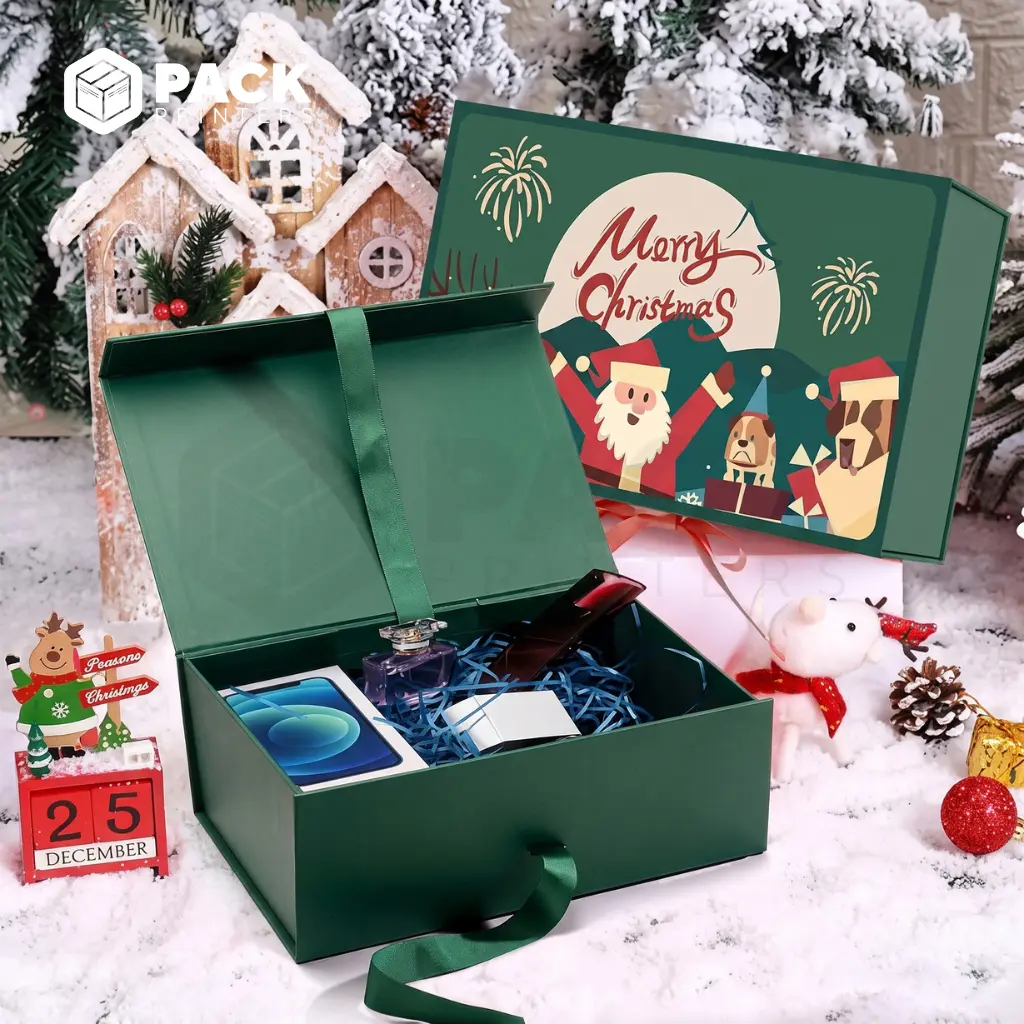
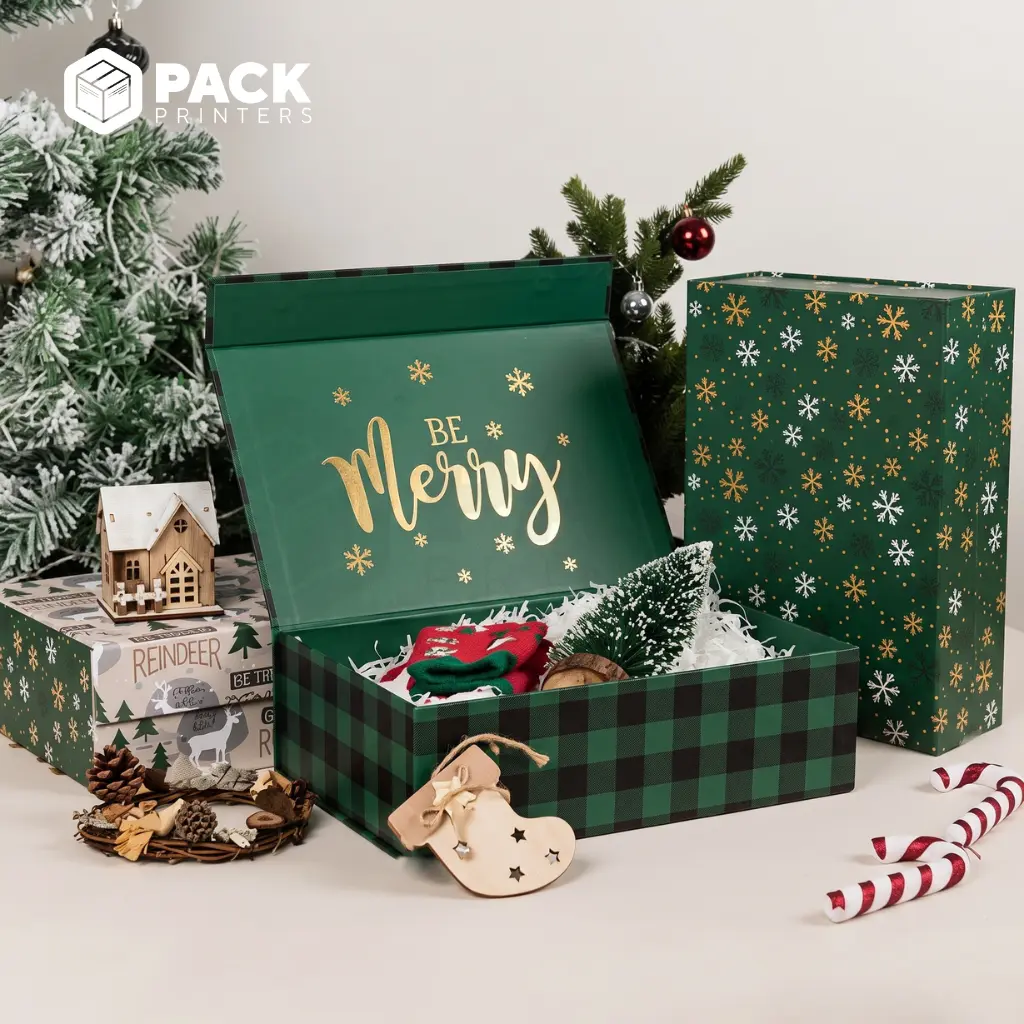

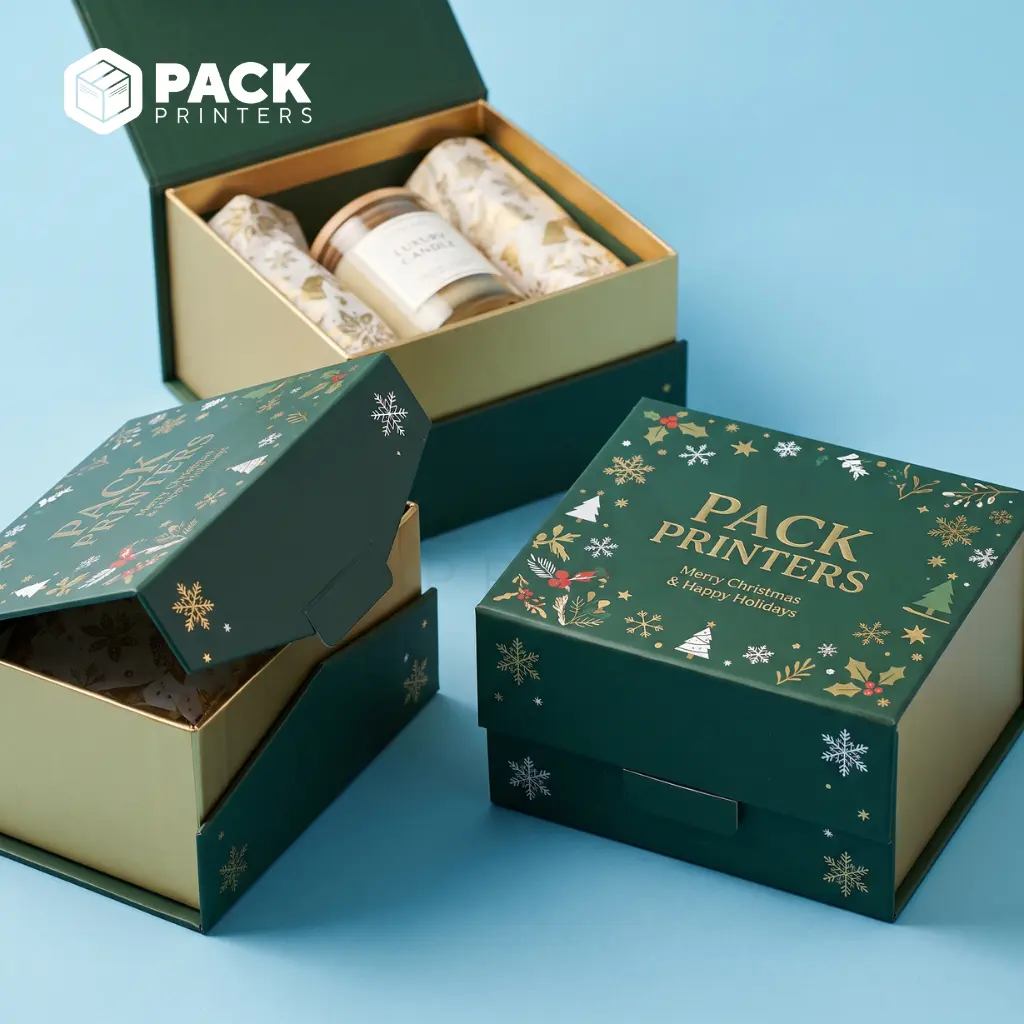
A Custom Christmas Boxes with Magnetic Closure is a rigid, hinged-lid structure with flat neodymium magnets embedded in the lid and base during wrapping, concealed beneath the paper so no hardware shows. When the lid closes, opposing magnets pull toward each other and hold the box shut without a ribbon, clasp, or tape. It’s the format behind the soft, deliberate click that reads as premium the moment a customer closes the lid.
Magnets have to be installed with matching, opposing polarity, one facing north, one facing south, so they attract. Get that backward during production, and the magnets repel instead of pulling together. This is a documented, common defect in lower-cost magnetic box production, and it’s invisible on inspection: the box looks completely correct until someone actually tries to close the lid, at which point it either won’t stay shut or visibly pushes itself open.
The only real fix is testing, not visual inspection. Every magnet pair should be checked for polarity alignment and pull strength before the wrap paper goes on, not after the box is fully assembled, since a misaligned magnet is effectively unfixable once it’s sealed inside the finished structure.
Magnet strength is specified in pull force, typically 3 to 5 pounds for standard gift and presentation boxes, and it needs to match what the box is actually holding and how it will be handled, not just the box’s outer size.
Use Case |
Recommended Pull Force |
Why |
Light gift boxes, opened once |
2 to 3 lb |
Enough to stay shut in transit without fighting the person opening it |
Standard retail and corporate gifting |
3 to 5 lb |
Holds securely through normal handling and repeated opening |
Heavier contents or rough handling expected |
5 lb and up, dual magnets |
A magnet that’s too small or weak lets the flap fall open during shipping |
Undersized magnets are a common cost-cutting shortcut, and the failure shows up exactly where you don’t want it: a flap that pops open in a shipping box rather than on a shelf where someone could simply press it shut again.
Beyond polarity, the magnet also has to stay physically bonded to the board, and that bond can fail over time from weak adhesive application, impact during shipping, or humidity exposure. A magnet that’s come loose inside the lid rattles, shifts out of alignment, and stops closing reliably even though the magnet itself is still fine. We use industrial-grade adhesive specifically rated for magnet attachment, applied in a consistent, machine-metered layer rather than by hand, since too little glue invites early failure and too much can prevent the magnet from seating flush.
The most common magnetic closure format, opening like a book with the lid attached along one edge.
Ships flat with adhesive corners, assembled by the end user, reducing freight and warehouse space before final use.
Material |
Typical Spec |
Best For |
Greyboard core |
1200 gsm standard, 1500 gsm for heavier items |
Structural rigidity and impact resistance |
Wrap paper |
Art paper, kraft, leatherette, linen-texture |
Print quality and tactile finish |
We print wrap sheets on offset presses for sharp color and registration, with matte or gloss lamination, foil stamping for a holiday accent, and embossing or spot UV available.
Our minimum is 100 boxes, low enough to test a new size or finish before committing to a larger production run.
The entire point of a magnetic closure is the moment it closes. Pack Printers tests polarity and pull force on every magnet pair before it’s sealed into the box, starting at just 100 boxes.
Contact Pack Printers today for your custom Christmas magnetic closure boxes quote, tested to actually close the way it’s supposed to.
Free Design Support
Free Custom Box Dieline
Free Shipping